

Gas workers
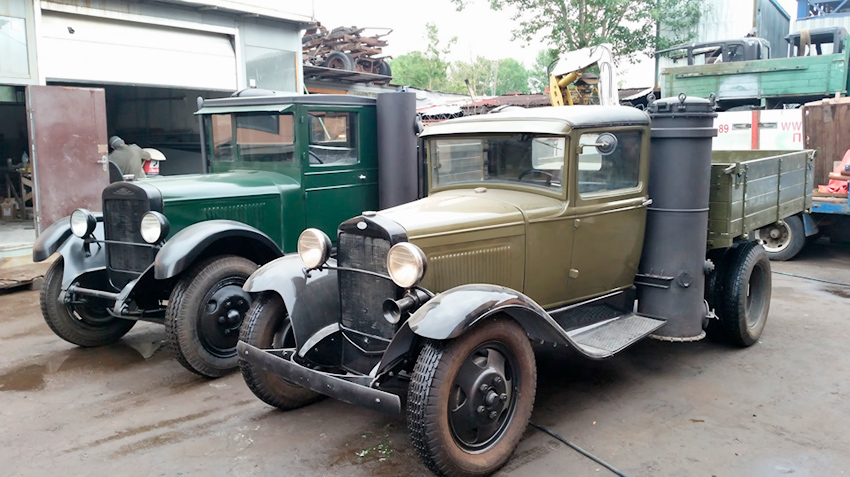
A brief history of gasification technology in the USSR not only


Alexander Klimov, photos autowp.ru, drive2.ru Volvo Trucks krisdedecker.typepad.com
Agency RAMR prepared for the Victory Day interesting material on motor trucks of the era of the great Patriotic war, which their additions and comments here.
Today many people (especially young people) automaat how it was possible to operate the car like this "biofuel" – in his direct nature? But, it really was – a cruel shortage of liquid fuel of a three-ton lorry and, indeed, had to be operated on wood, or producer gas (wood) gas, manufacture of wooden chocks and other solid fuels directly in the car, etcn of gas plant.
the History of gas cars
Cars and trucks, buses and tractors, as well as the railway rail motor tractors (low-power locomotives for shunting work) and the river craft using wood (gasification) gas as fuel, began to develop in the 1920s, but to the series in the Soviet Union, they came in the late 1930s, and earlier in 1934-1938 he was conducted a test motor of such equipment. Moreover, interest in producer gas technology was quite serious and in many European countries, i.e., was what is called "global trend".
In the USSR, where during the first Five years the Park of automobile and agricultural machinery (but more tanks and planes) increased very much (some trucks in 1941 was already more than a million and hundreds of thousands of tractors and 23 thousand tanks and tens of thousands of aircraft) there was severe shortages of liquid fuels. But such was at that time almost exclusively gasoline and the heavier fuel oil types type of ligroin and kerosene, but not diesel fuel, which has found more limited use because of the high cost and complexity of the then diesel engines. Wood gas is a product of combustion of organic materials (wood, charcoal briquettes, peat briquettes, and coal).
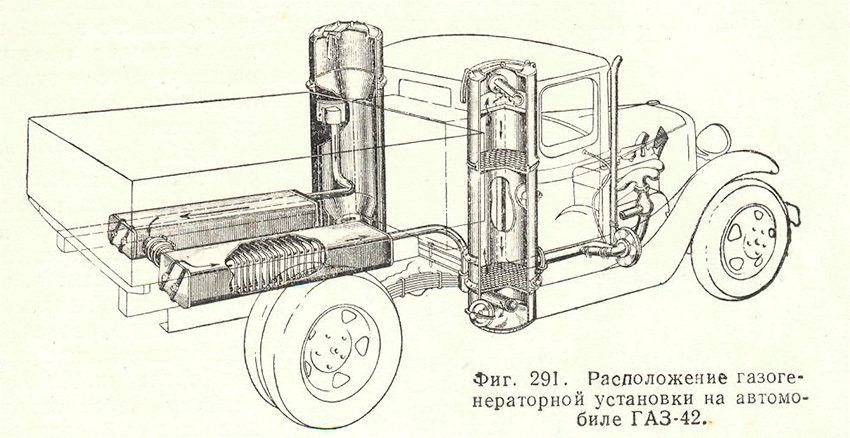
To work on this type of fuel cars and tractors, of course, needed special equipment. The kit itself consisted of a bunker, which is almost completely loaded fuel in the form of lumps or briquettes of peat, the cooling unit (second radiator, usually before the main montirovalos), coarse and fine filters, and mixer with air before it enters the engine. The advantage was that the classic gasoline engine to operate on producer gas the mixture almost did not need revision. However, the downsides were enough, but they are below.
Before the war, Soviet designers (with more urgent attention to the problem of the leader Stalin) has created various models of equipment on gas fuel from cars to boats. However, the most famous and massive gas machines were produced on Assembly lines, the trucks and, accordingly, the GAZ-42 and ZIS-21.
GAZ-42
GAZ-42 – gas modification of the legendary "polutorka" GAZ-AA/GAZ-MM production Gorky automobile plant. This model was released in 1938-1950 gg., and fuel for it served wooden chocks special procurement. The engine power was lower at baseline, pure gasoline engine (40 and 50 HP), despite a significant increase in compression ratio (from 4.6 to 6.5) was only 30-35 HP, and the capacity decreased to 1.2 tons, but because of the need to carry a supply of chocks (the reserve at a "gas station" was only 60-70 km) really do not exceed 1 ton.
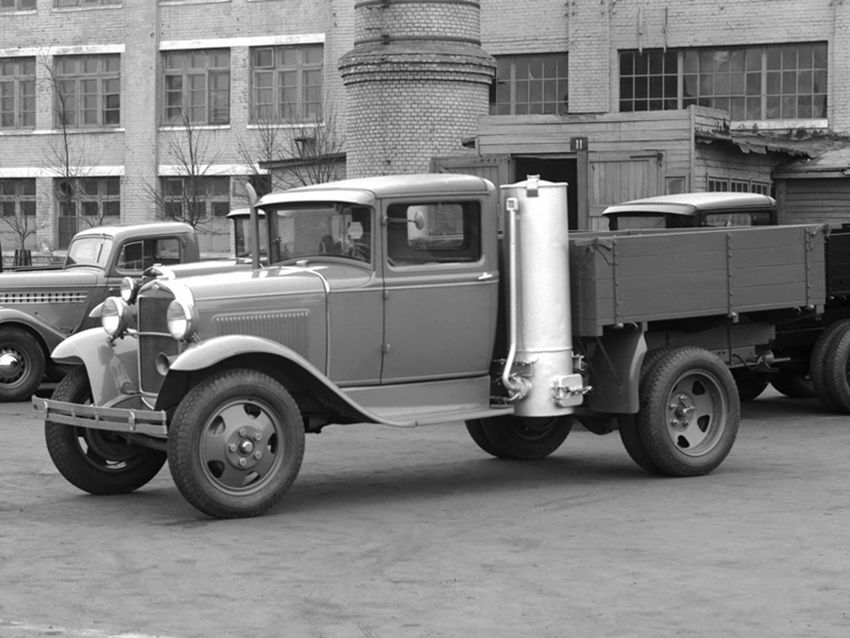
GAZ-42 prewar sample
Gas plant NATI-G-14 also produced Gas and its weight was 250 kg. Nominal solid fuel consumption was 35 kg/ 100 km and a maximum speed not exceeding 50 km/h, including due to the increase in the number of main gear from 6.6 to 7.5. In addition, the translated gas engines have extremely poor starting characteristics, which had to keep a small supply of petrol, but even when the engine is started on petrol demanded from the driver's special art in the transition to gas.
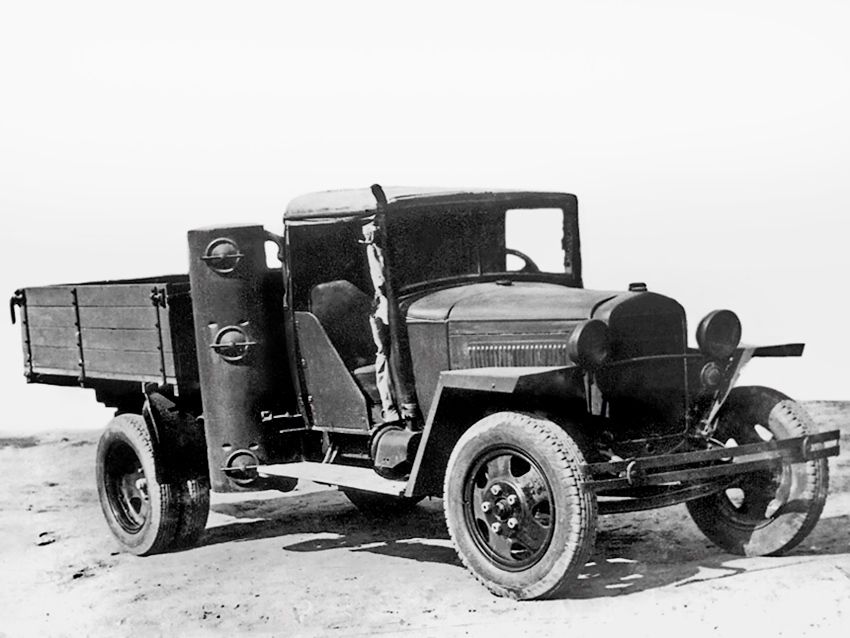
GAZ-42 wartime on the basis of GAZ-MM-IN model 1942
The process of starting with gasoline takes 10-15 minutes, and with direct ignition of the gas generator and all of 30-40 minutes, requiring the driver downright alchemical abilities.

GAZ-43
The other gas version of the GAZ-AA was the GAS-43, working on more energy-intensive charcoal. This modification was distinguished by smaller dimensions and weight of gasifiers and produced in small batches in the 1938-1941 years, but because of the need to use more heat resistant and hence expensive grades of metal, its production with the outbreak of war, was abandoned.
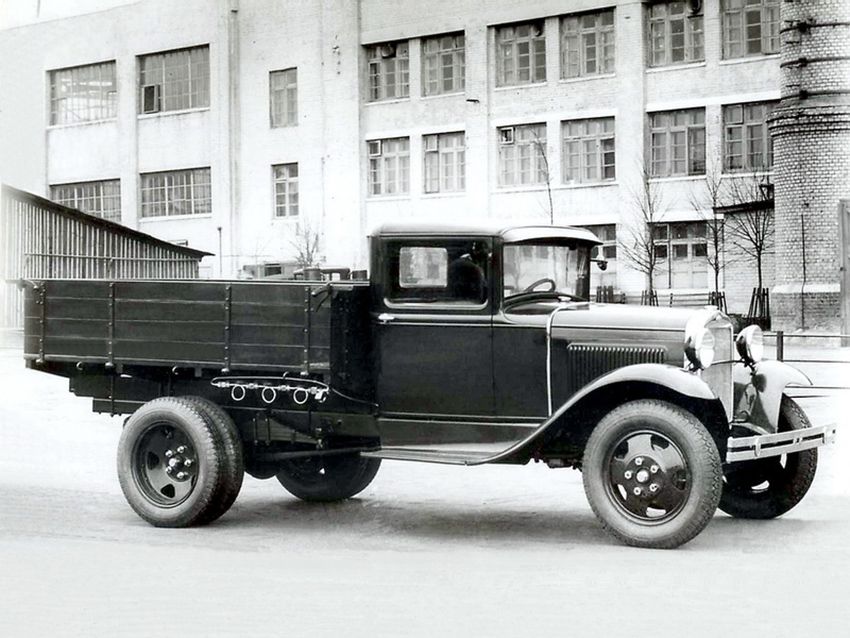
GAS-44 – ancestor of all domestic motor cars
Existed first in the history of the domestic automobile industry cylinder version of the GAZ-44 with the compressed gas. Six of compressed gas cylinders with total capacity of 60 m3 was located under the cargo area. The total weight of the gas plant was 420 kg. Gas equipment produced Kuibyshev carburetor plant. The average mileage of the vehicle without replenishment of the gas depended on the type of fuel and was 150 km on coke oven gas and coal gas, 200 km to the synthesis gas and 300 km on CNG. The car was produced by a small batch of 130 units in 1939.

GAS-45
In the first (more peaceful) half of 1941, was released and smaller party (only 45 units) of trucks liquefied petroleum gas (propane-butane) is a GAS-45. However, the data of LPG lorry had to operate mainly in the vicinity of the Gas itself, because of the underdeveloped network of gas-filling stations.ZIS-21
ZIS-21 was a standard truck, ZIS-5, equipped with a gas generator, which was manufactured at the Moscow plant "Comet" (according to others it was the same gazogenerator NATI-G-14). The full mass of the gas plants was 440 kg. The height of the tank (hopper) of the gas generator – 1360 mm, width – 502 mm. the Weight of the fuel in the hopper has reached the 80 kg. Fuel for gasifiers could be wood lumps, briquettes from wood shavings and sawdust, waste from sawing, coal and peat briquettes, and even cones (for initial ignition).
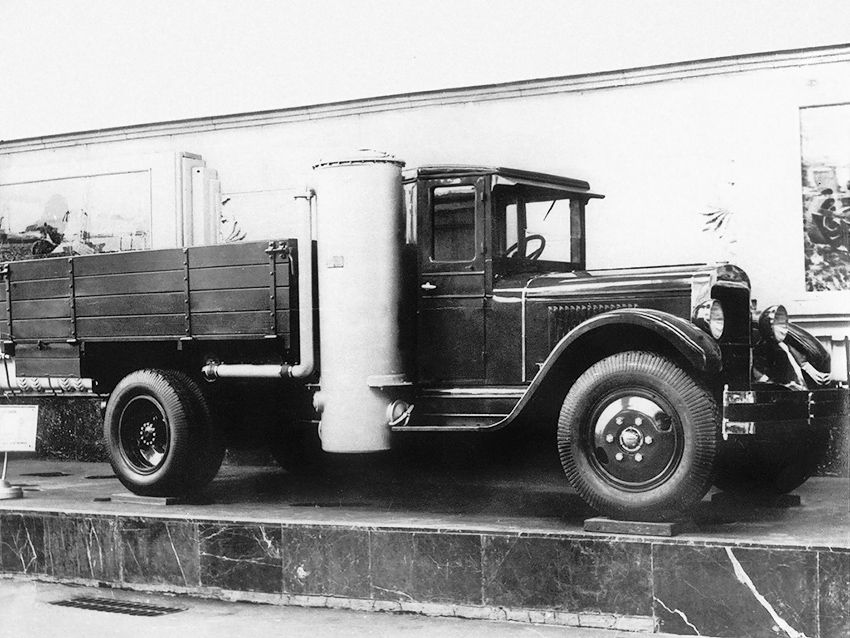
ZIS-21 was released just before the great Patriotic war (photo machine in export-exhibition with Nickel-plated radiator and bumper, which was on order)
The car was equipped with the modernized 6-cylinder inline engine ZIS-5 with a volume of 5.5 l, but by holzgas his power fell with a par of 73 HP to 50 (according to others 45) HP, despite the increase in compression ratio from 4.6 to 7 that reflects both the capacity decreased to 2.5 tons (not including fuel) and the speed dropped from 60 km/h on petrol up to 48 km/h on wood gas. One portion of the hopper enough for 60-100 kilometers depending on the type of rechargeable wood.
By the way, in the period 1941-1944 put the generators and buses production VMS (models ZIS-8 and ZIS-16), which was converted back to gasoline after the Victory.
Wood workers
During the great Patriotic war, when a shortage of liquid fuel, which primarily went to the front, in the rear areas arose no less acute than the enemy, gas trucks and buses (ZIS-8 and ZIS-16) fully contributed to the great Victory. The use of a rather complex gas plants led to a reduction in mileage on one filling, reduce load, reduce power and engine life (bad wood gas purified primitive filters and destroyed the cylinders and valves), but they more than overlap the main advantage of this car – free works on practically free fuel. These "wood-burning" truck was the main vehicle in the rear (especially in the Northern and Eastern parts of the country), transporting goods in the logging industry, industrial enterprises and in agriculture, fighting in the country.
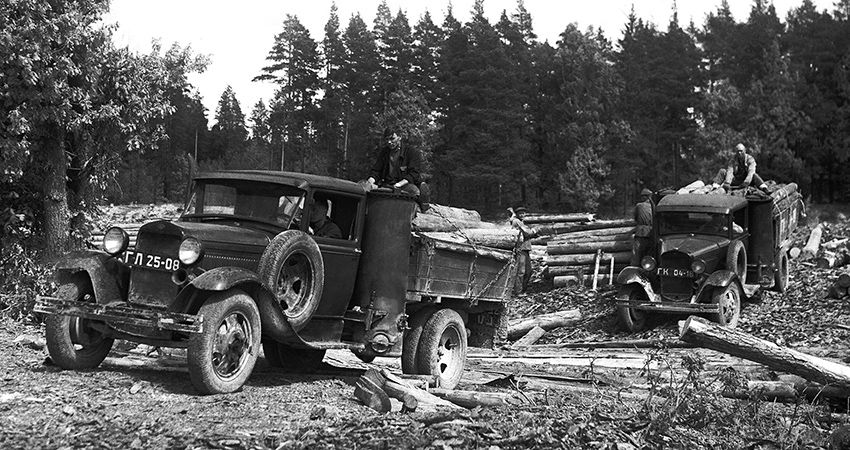
The export of forest with plots of GAS-42 in the summer of 1942
Same can be said about the tractor: the most famous model – HTZ Т2Г (release 1938-1941) on the main track selhoztechnika HTZ-NATI.
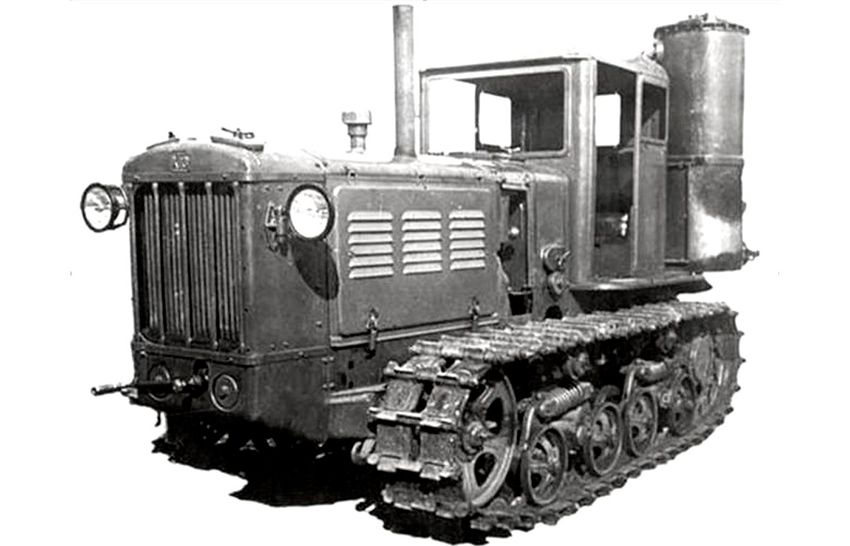
The main pre-war gas tractor HTZ-Т2Г
For the prewar years and the war years, when the most actively propagated from the top gas transport in the USSR was released on 31 956 units. gasification truck GAZ and 15 445 units of gasification equipment brand ZIS and thousands of tractors-Т2Г and other equipment.
However, frankly, largely "free" gas fuel is maintained at the expense of logging in the Gulag system in which the production of gas it chocks completely specialized five of the timber industry, closed in a time of mass rehabilitation of the 1950's. Hence the very fast vanishing from the scene gas machines in the era of the Thaw.
At the front
In experiencing a severe shortage of liquid fuel the economy of the Third Reich, and in Europe cars and tractors on gas fuel was used during the Second world war, even more widely, than in the USSR, for example, in Finland in 1944 gas trucks 100% trucks Park, and in neutral Sweden – 85%, and tractors and other equipment in these countries are also operated frequently on wood or coal.
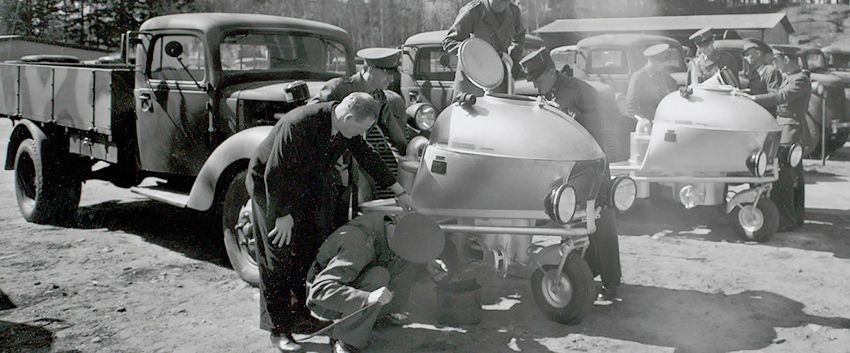
The Swedish military during the Second world war, visiting the gas installation of front hitch for Volvo LM11
In Germany, gas-producing vehicles (mainly coal) produced Daimler-Benz, Opel, Ford, Bussing-NAG and Volkswagen.
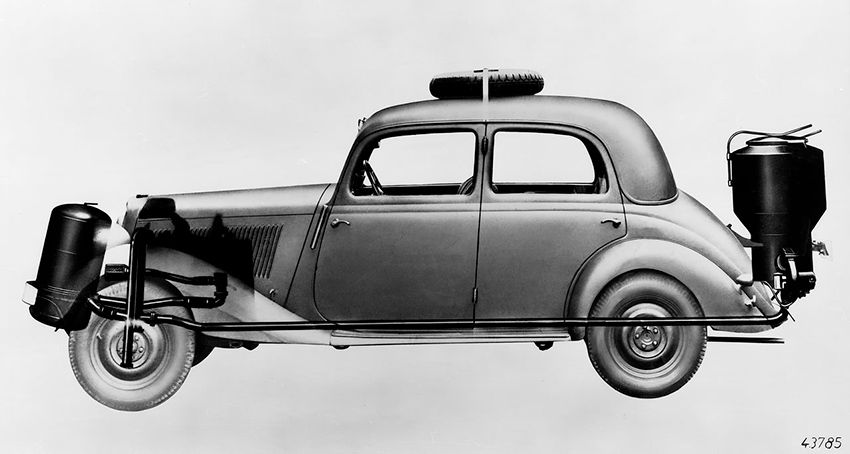
Diagram of the gas generator of a passenger car Mercedes-Benz 170 V
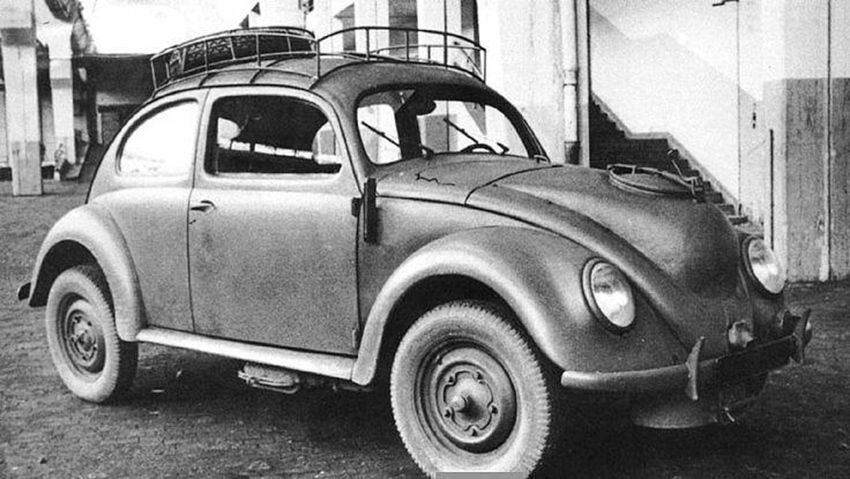
Gas version of the "people's car" KdF-38, which became later the legendary Volkswagen Beetle.
Gas plants in Europe during the Second world war were massively equipped with not only trucks but also passenger cars, buses and even motorcycles with sidecars.
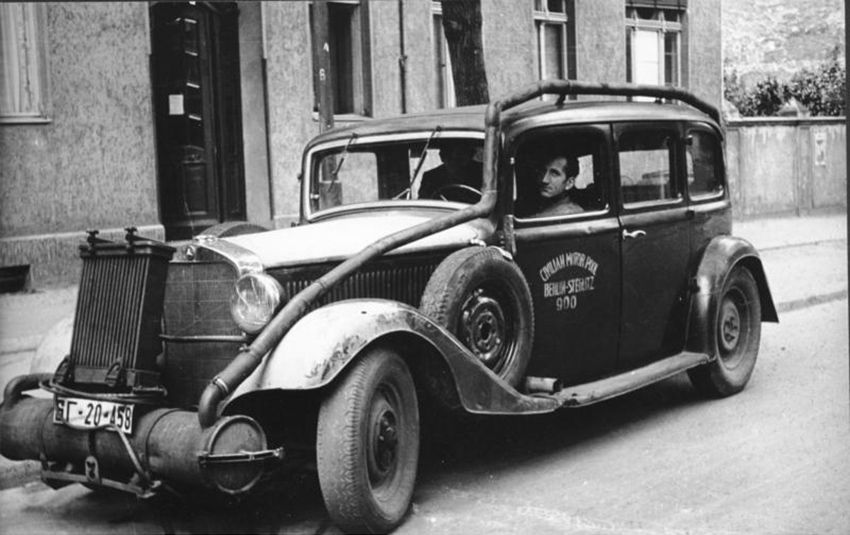
Not all gasifiers during the Second world war were distinguished by elegance, such as this Mercedes-Benz 320
After the Second world war both the USSR and the countries of Europe began gradually to abandon the use of gasification technology.
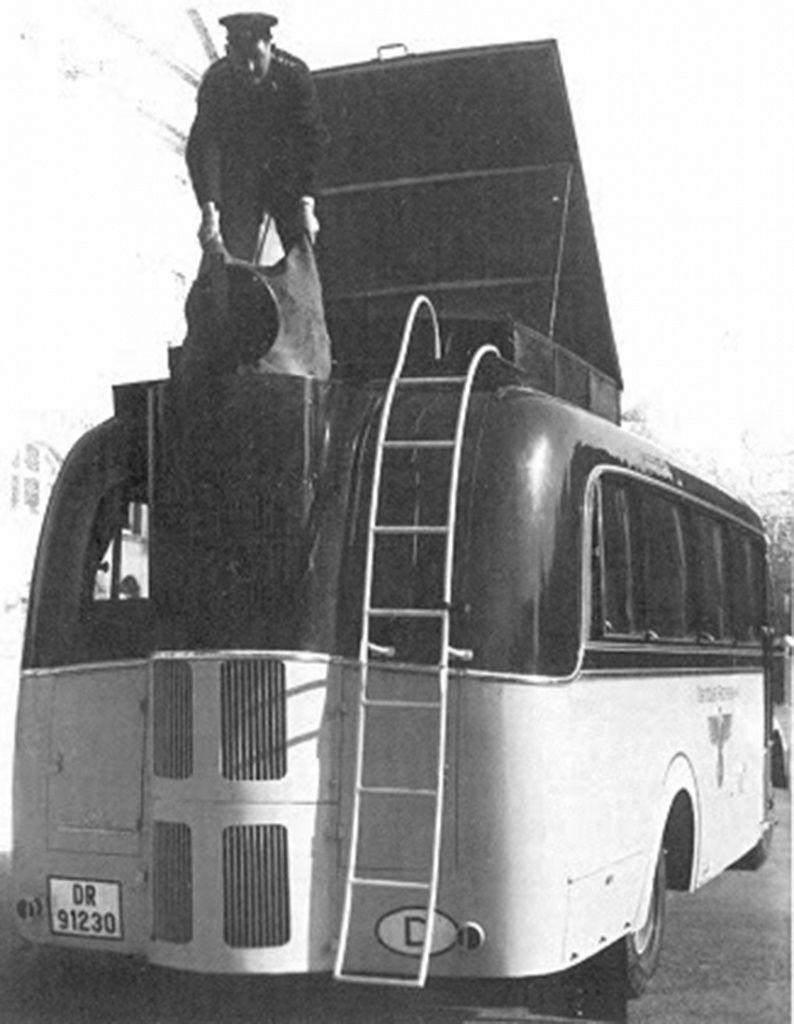
Refueling gas-bus fuel coal in Germany 1940s
In subsequent years, gas cars have often been the fruit of the labor of craftsmen-motorists.
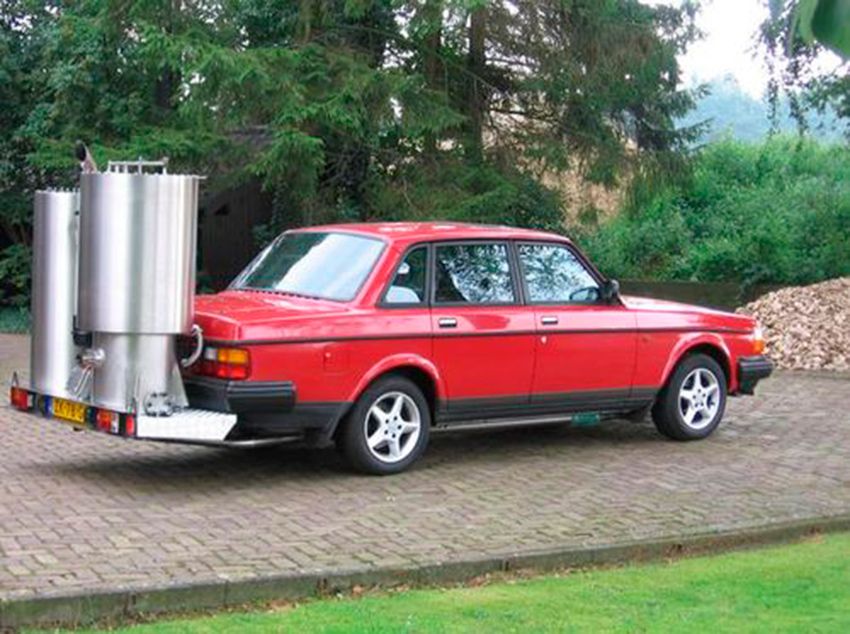
Redone craftsman on wood fuel sedan Volvo-240
Regarding massively the technique of wood-gas is now used only in North Korea.
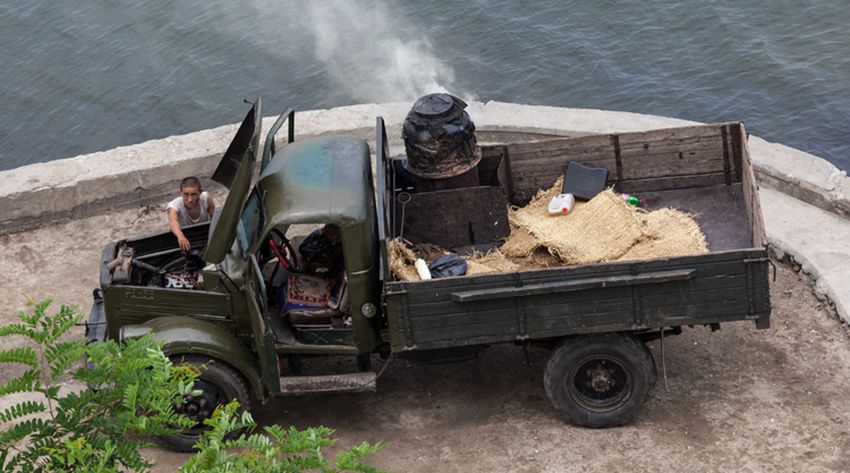
North Korean poor fellow-the driver at his gas truck seungri-58 (license GAZ-51)
.


|
|
|