

Daimler Bus introduced buses Mercedes-Benz eCitaro before Hamburg
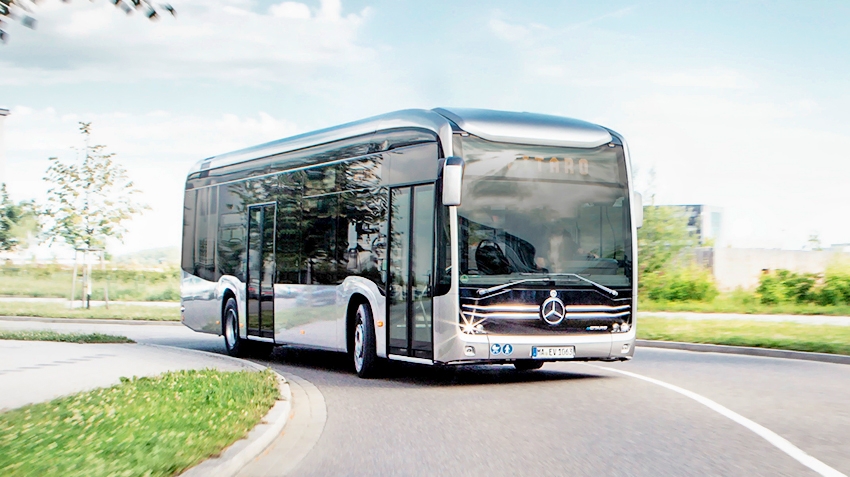
Until the end of the year, German operators will start to receive the serial buses of the Mercedes-Benz eCitaro

jpg" src="/upload/medialibrary/630/630a6b84c237a37e97d7338e08ae1b28.jpg" height="638" title="18C0462_026.jpg">
New design
According to developers in the development of electric bus design of the original diesel bus was not just modified for the installation of generator sets, and so radically revised that it is possible to actually talk about the development of a new model only stylistically continuity with the base Citaro family. The designers have additionally tried to facilitate visual perception of the big city machines.
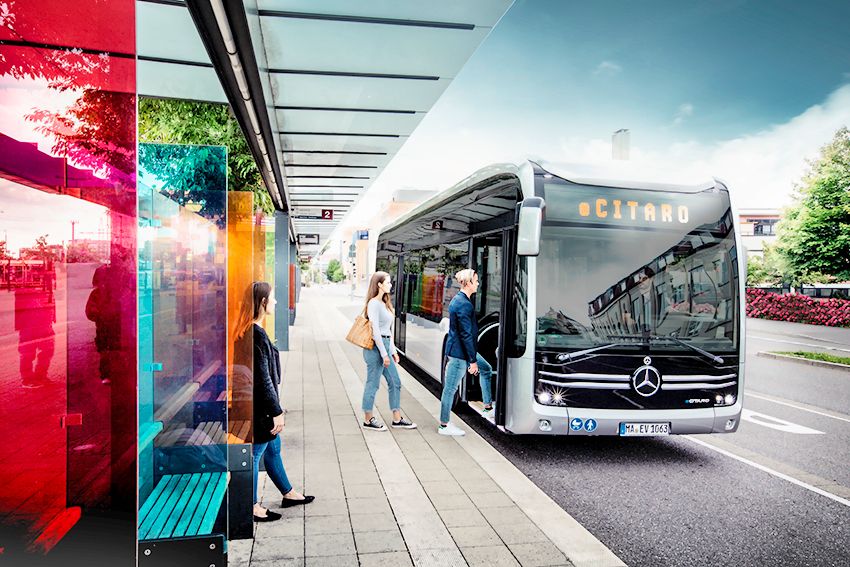
Electronica
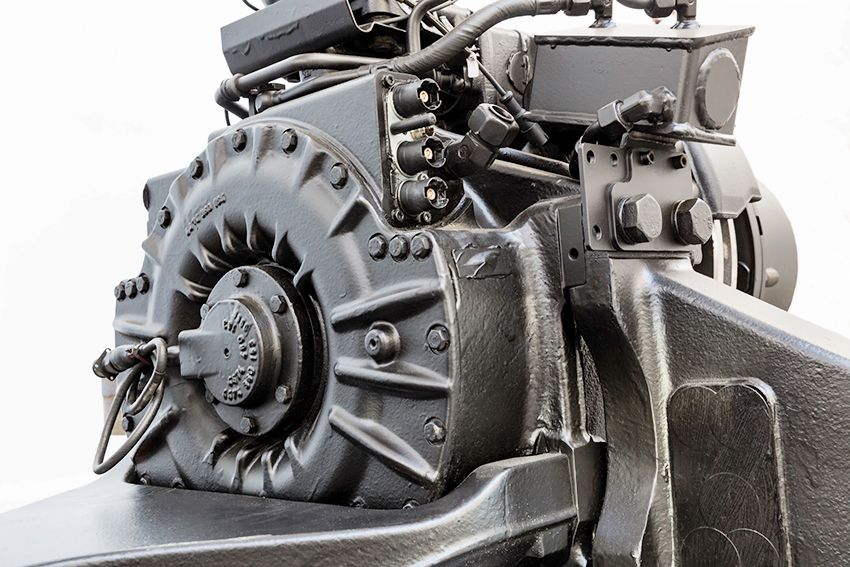
ECitaro the actuator includes two electric motors with a capacity of 125 kW and ΜM=485 N•m each, built into a proven and optimized portal rear axle, type ZF AVE 130.
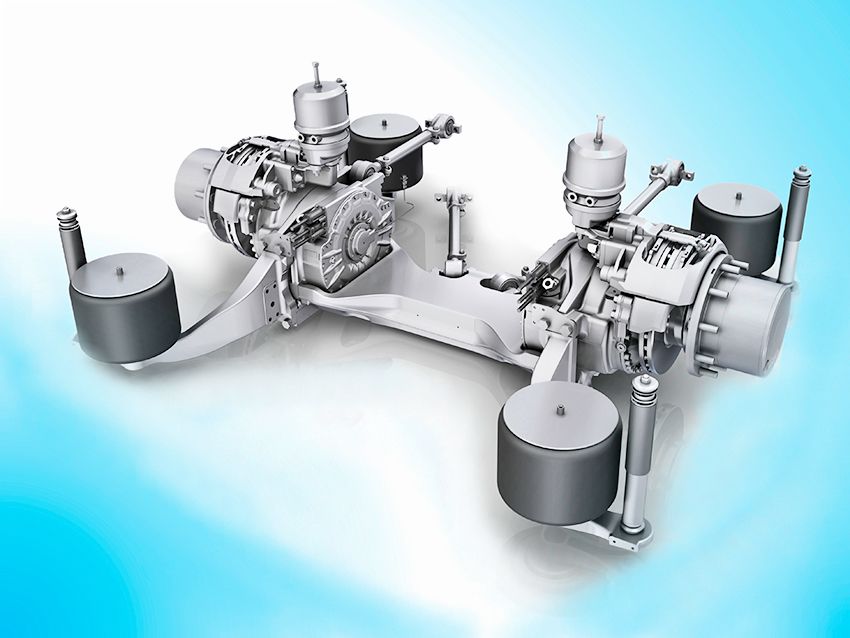
These engines allow the same to move rapidly and fully loaded interior.
Battery batteries modular construction placed on the roof and in the rear of the car to improve weight distribution along the axes – the Achilles ' heel of all modern buses. Just eCitaro can accommodate up to ten battery packs, with a capacity of 25 kWh each, and the basic version of the curb weight of 13.44 tonnes (gross weight with 88 passengers – 19,5 t) involves the installation of only four blocks in the rear overhang and two on the roof, and depending on the needs of the customer can be upgraded to bus two or four battery packs placed on the roof (for this front axle capacity has been increased to 8 t). Each battery module consists of 15 lithium ion 37-voltage cells (each cell in turn of the 12 items) and block control charge and discharge control with data transmission.
The maximum number of batteries, of course, increases the range, and their reduction – reduces the cost of the machine and its weight, but restricts the mileage and increases the time to recharge from the city mains.
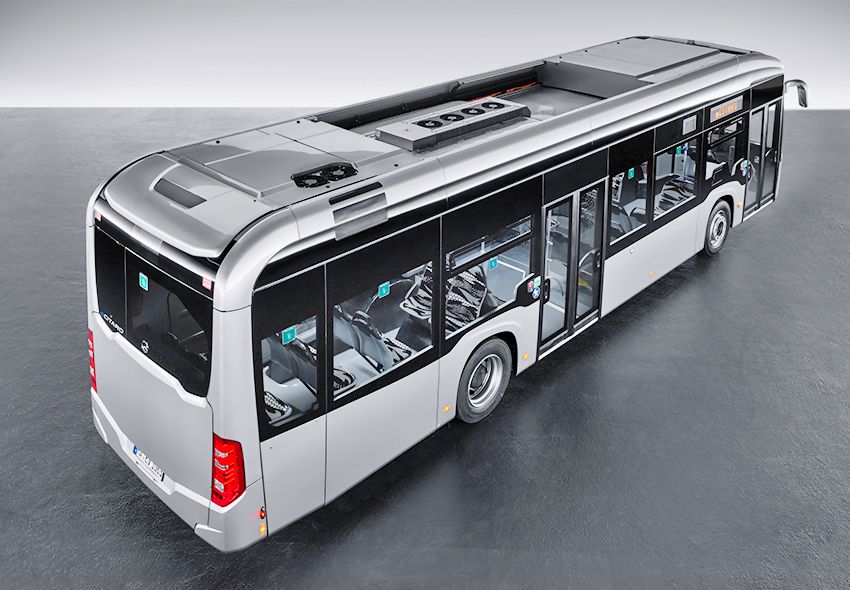
Manufacturer unlike competitors, often stating figures reserve for ideal conditions, says "unconditional" range of 150 km (10-battery variant) according to the most rigid standardized urban driving cycle known as SORT2, however, also only in summer. However, such a reserve allows you to take on about a third of the needs of operators, i.e. it is able to replace every third diesel bus. Under ideal conditions the mileage can reach 250 km away.
Heat pump will help in the frost
However, when the outside temperature is -10°C the current consumption of the bus increases by half, respectively, halving mileage compared to the trips which do not require heating. Therefore, it is important to use to heat the passenger compartment self cooling system of the power plant. The developers emphasize that the system of thermoregulation in the battery blocks and in the interior of their specially modified and allows you to spend for air-conditioning or climate-control and heating of the cabin of the bus 40% less energy than required for diesel cars, which also became one of the technological breakthroughs eCitaro.
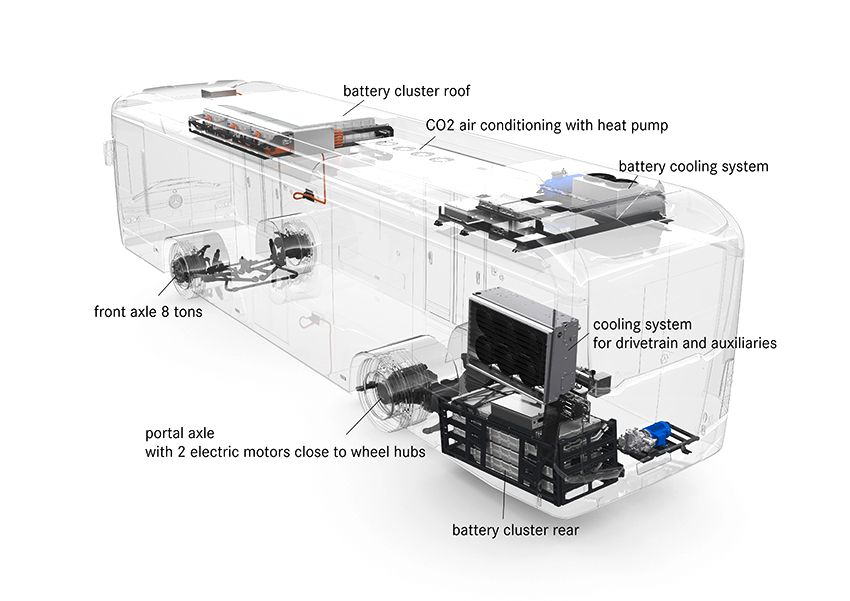
So for thermoregulation batteries (which directly depends on their capacity) uses a special cooling system on the roof, and at extreme temperatures could connect cabin climate control based on the principle of a heat pump that provides such a high efficiency system. Power conditioning systems and heating varies depending on the number of passengers in the cabin through the load sensors on the axis. Taken into account also seasonality, which allows less deeply to cool or heat the cabin, and even considered heat emitted by the passengers, so pripadnosti busy salon heating can even be disabled. However, if the cold is below 10 degrees there is also the possibility of using additional auxiliary heater on liquid fuel. As a staff of the refrigerant, by the way, using CO2, i.e. the carbon dioxide which now there is an irreconcilable struggle. Another saving factor will be a function of cooling or heating the passenger compartment during the recharging of batteries from the charging station.
Poseredke from the plug to the pantograph
Charging technology eCitaro also allows to adapt to individual wishes and requirements of transport operators. At the beginning of serial production on eCitaro will be provided with charging socket for plug type Combo-2, located above the front wheel arch on the right side of the bus in accordance with the provisions of the German Association of public transport operators (VDV). This will ensure the easiest, fastest and at the same time a cheaper version of the power supply.
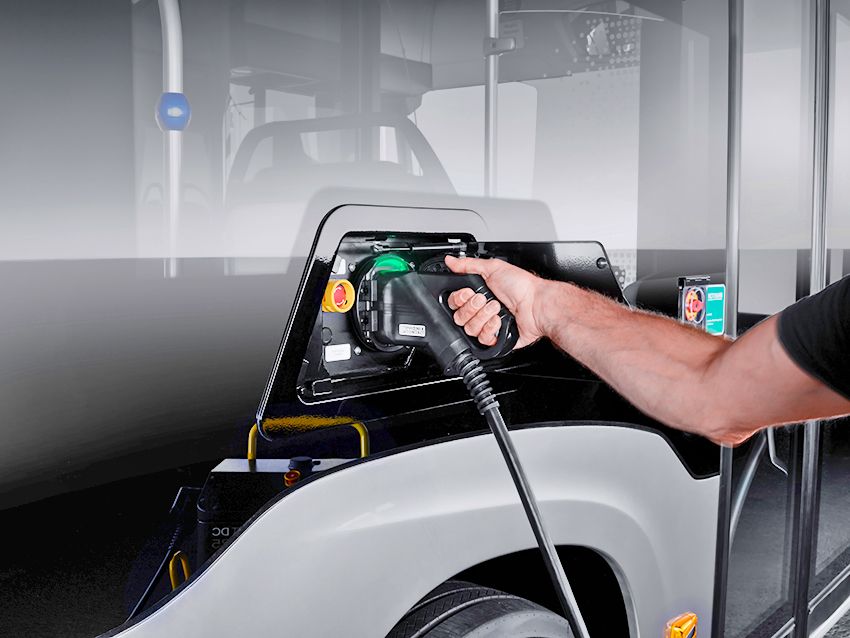
If the increased mileage will need quick recharging in the future will also be provided the ability to recharge eCitaro through the pantograph. This option will be implemented gradually and in stages, but after the start of serial production of buses. You have two options: 1st – built-in pantograph on the roof; 2nd – pin rails on the roof that allow you to charge through a stationary pantograph charging station. In both cases, the installation of chargers will be located on the front axle.
This smart modular technology concept economical stationary or high-speed charging means that Mercedes-Benz can offer transport operators the opportunity to select the version eCitaro specifically for the individual requirements of your company or even for individual routes.jpg" src="/upload/medialibrary/cde/cde2bc679b9ceeddfe6fba8325370947.jpg" height="567" title="mercedes-benz_ecitaro_60.jpg">
Changed only the scales in the instrument cluster instead of a tachometer entered dynamometer (power meter), which shows the percentage of power used during acceleration and braking. The driver also receives status information and battery range and charging indicator on the display. A system for training of energy saving driving system control acceleration, providing the same acceleration the acceleration of any occupancy of the bus, which also increases the comfort for passengers, while allowing you to save energy.
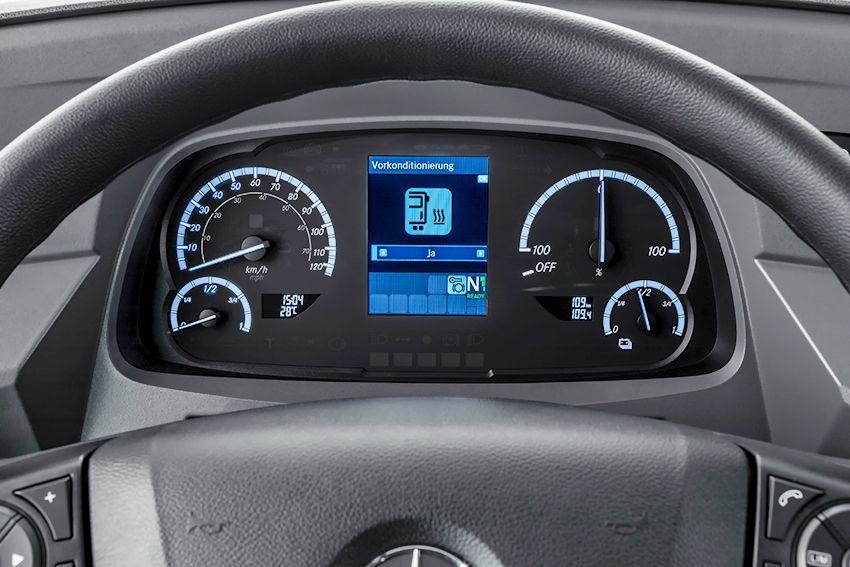
With the help of multistage lever electric retarder (naturally regenerative) the driver can set any desired deceleration of, for example, is the same as diesel bus, and the inhibitor begins to work immediately upon removing the foot from the accelerator.
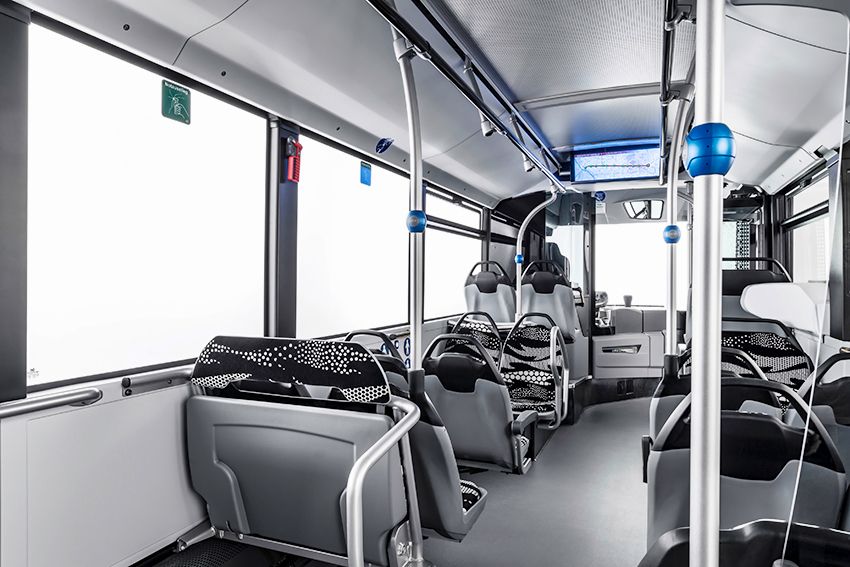
Naturally, the climate control for the driver individual and provides the most comfortable temperature regardless of the temperature in the passenger compartment.
Test electric bus went in full
Interestingly, the new electric bus goes into operation being Mature enough driven model, since the beginning of its serial production (by the way on the General Assembly line at the factory in Mannheim, where you are going and conventional diesel Citaro) was preceded by a two-year operation of about a dozen experienced battery Citaro E-CELL (with batteries with a capacity of 180 kWh).
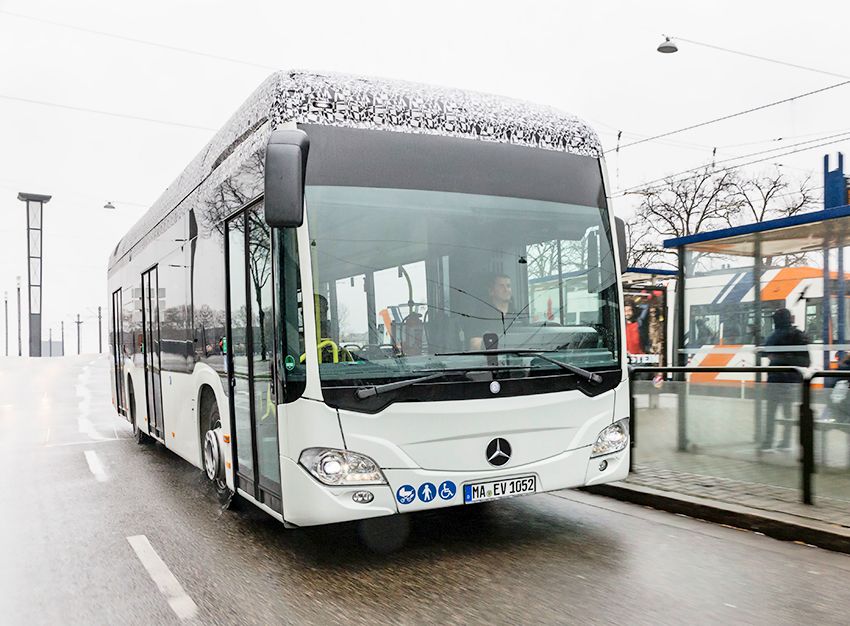
Rear drive electricity and electro-hydraulic power steering is already long enough are in production, and technologically worked out, and reinforced the roof with heavy-duty elements of the supports under the battery passed the test for a gas version of the Citaro NGT. The bus eCitaro experienced the same cycle of testing as conventional buses with a three-beam star, so Mercedes-Benz fully reasonable spreads and it is famous for the reliability of their brand. The electric bus was tested at temperatures below -15°C in the Arctic circle and at temperatures above +30°C in summer in Spain. Winter testing, for example, also included tests on handling on slippery roads and efficiency in these conditions of recovery. Summer tests were conducted in the complex urban traffic or on mountain roads in the Sierra Nevada. Provided testing and on bad roads, as well as resource test.
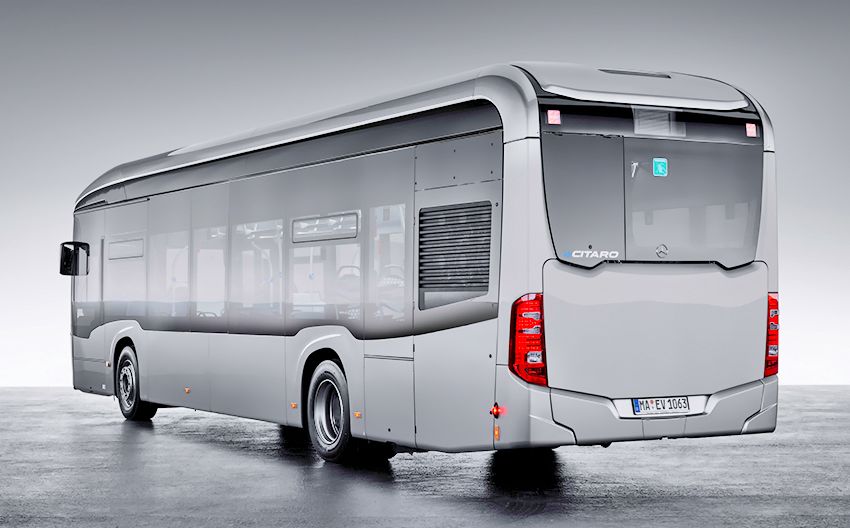
Attention has also been given to security, for example, eCitaro passed the crash test with a collision of a passenger car from behind, and, on the side where the batteries are located. Were evaluated and options for compatibility with the charging device that has led to the emergence of optimal interaction between the electric bus and infrastructure. So eCitaro in accordance with ISO 15118 communication charging station with the control unit of the electric bus.
production since the end of the year
Mass production of electric bus company Daimler plans to begin by the end of the year, the first deliveries to customers will begin before the end of the year. By the way, new eCitaro will belong to generation "connected vehicles" – it is embedded in the system eMobility buses Daimler. This system eMobility supports transport operators from thorough consulting services and an intelligent control system payments for employee training and the provision of specific services.
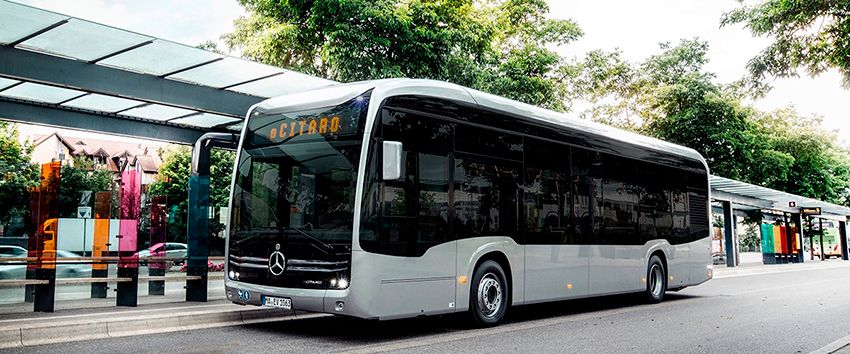
First customers have already formed queue. Thus, the first serial buses of the Mercedes-Benz get the German transport company Rhein-Neckar-Verkehr GmbH, which serves the Metropolitan region Rhine-Neckar. A batch of 20 cars will be delivered in Hamburg, the company Hamburger Hochbahn AG (two before the end of this year) and another 15 cars ordered by the company Berliner Verkehrsbetriebe (BVG).
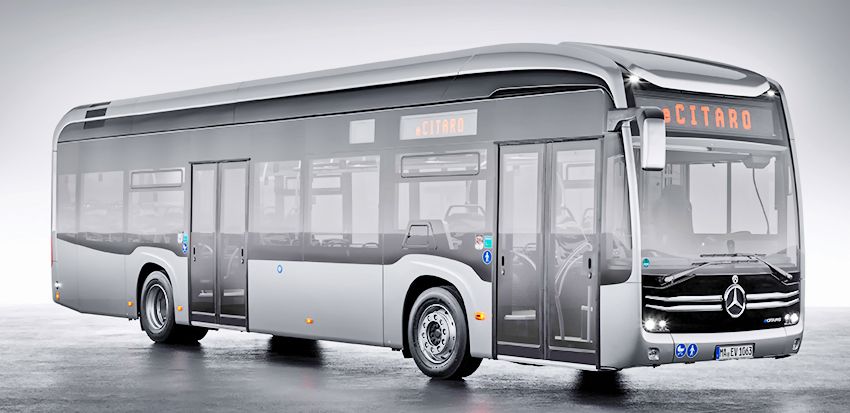
Daimler assumes that the buses eCitaro could replace the conventional buses in the coming years, at least in the cities and towns.
Perspective – from lithium to hydrogen
Along with this, the company said that it is developing a new generation lithium-nikil ' -magraner-cobaltocene elements (NMC). It is assumed that such battery NMC 2.0 will differ a higher energy density is 33 kWh in a separate battery and up to 330 kWh in the battery module and a long service life. While maintaining the same dimensions and electrical new batteries NMC 2.0 will increase the amount of energy eCitaro to cover 50% of the needs of carriers and will give the opportunity to produce articulated bus eCitaro G with sufficient reserve.
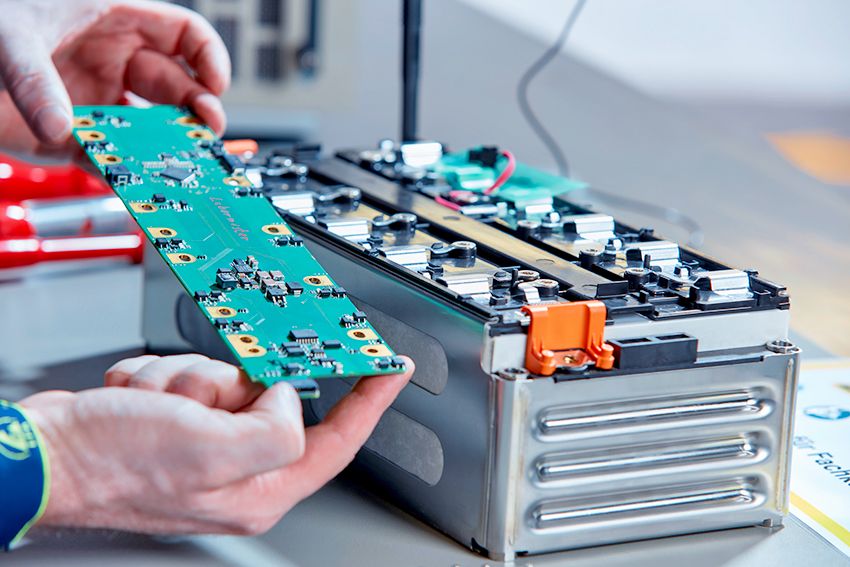
In a parallel development are also solid-state lithium-ion battery with particularly long service life and high energy density. At a nominal battery capacity of about 400 kW•h on the bus-solo or even articulated eCitaro it will be possible to meet approximately 70% of all traffic without the need to recharge. However, such battery different a different form with more volume (for equal weight), not interchangeable with batteries and NMC cannot take fast charging. Accordingly, the scope of eCitaro with NMC and solid – state batteries will be used to produce them will be parallel. The next step will be the release eCitaro hydrogen fuel cell (Fuel Cell), which will, in General, to remove all questions on the reserve and, correspondingly, will block 100% of the needs of transport operators.
Public funding supports the development
The development of commercial transportation system of city buses through the project "SAEBEL", funded by the Federal Ministry of transport and digital infrastructure of Germany in the framework of the financing policy of electric vehicles a total of €1.85 million policy Implementation funding koordiniruyutsya "National organization for hydrogen technologies and fuel cells" (NOW). The results of the financing BMVI in the context of local public transport combined in the study support programmes as part of the working group "Innovative propulsion system for buses". To accelerate the development of the market under version eCitaro hydrogen fuel cells as a means of extended range, Daimler Buses is aimed at financing within the framework of the German "National innovation program hydrogen technologies and fuel cells" (NIP)..


|
|
|